




Bristol Museum’s geology collections contain many important and beautiful fossils acquired over the past 200 years. The collections are continually being enriched and developed with the addition of new material. In 2016 an incredible fossil of an incomplete dragonfly forewing was discovered by the quarry foreman at Bowden’s Quarry, near Langport, Somerset. The rock that this beautiful fossil was found in dates to the Late Triassic, approximately 205 million years old. The specimen is in two pieces, part and counterpart, revealed after millions of years after the rock was split in two.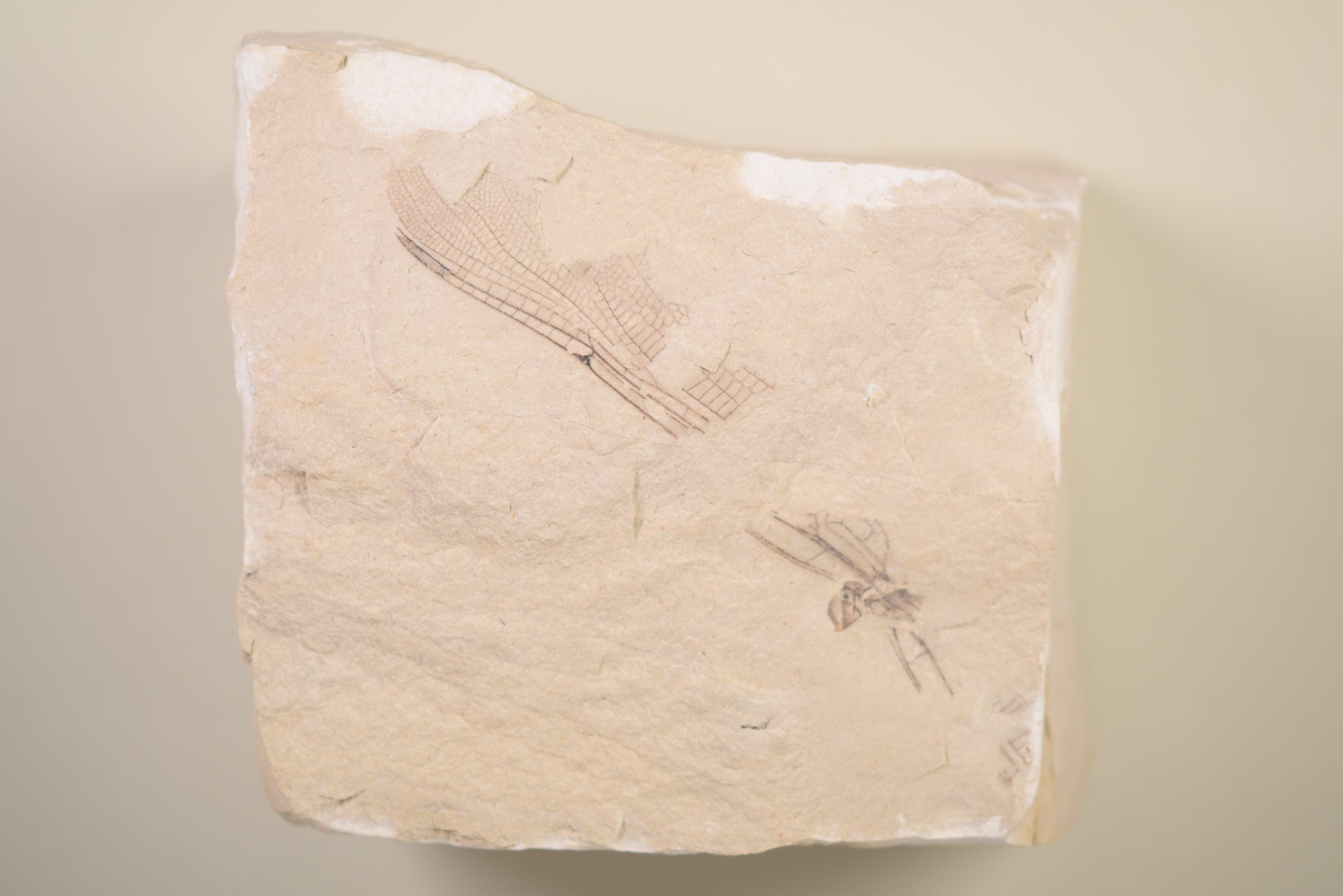
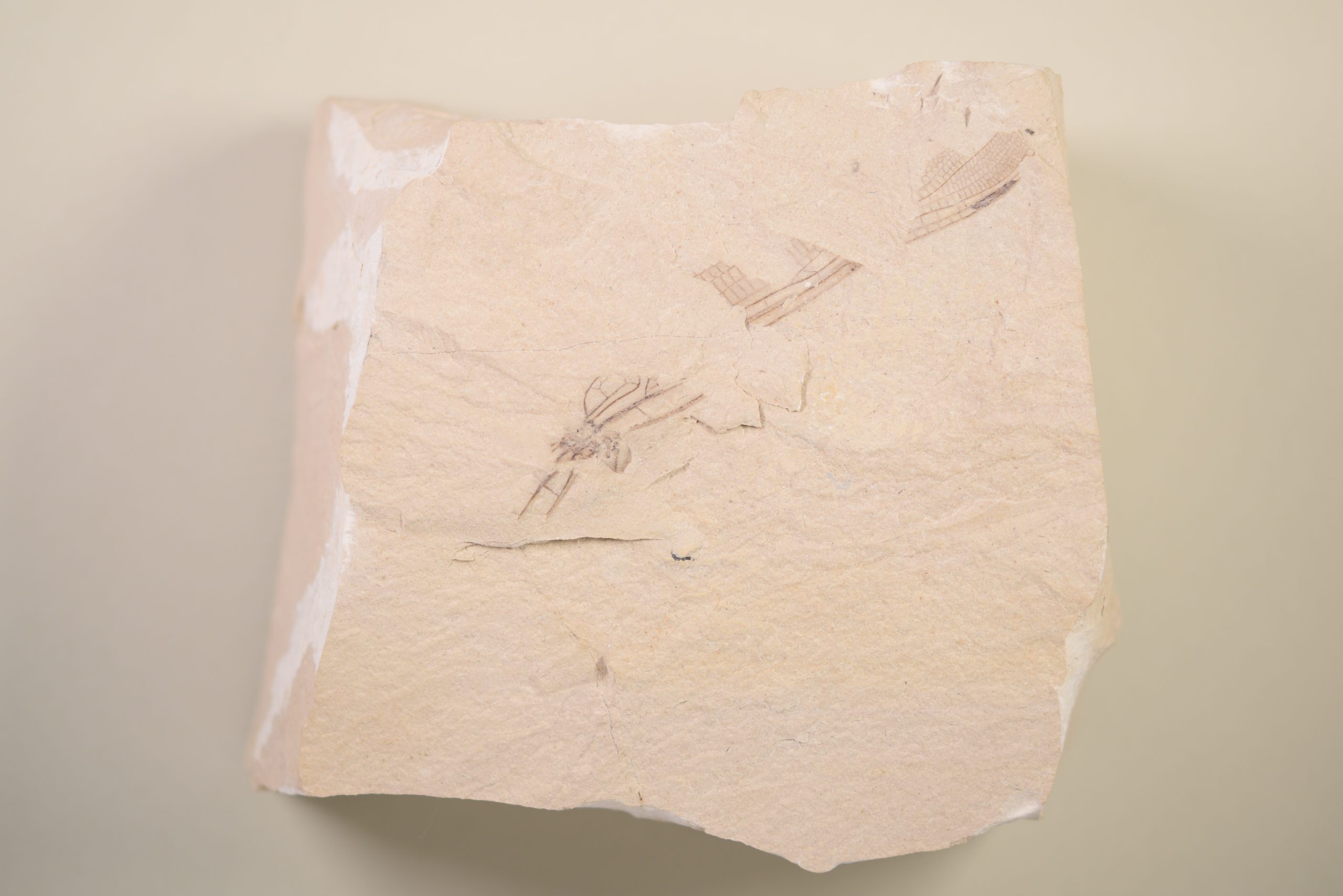
It was donated to Bristol Museum in 2018 by local geologist Simon Carpenter. Simon had a feeling this fossil was important and special, and he was right.
Earlier this year a researcher specializing in fossil insects visited the geology collections. She was very interested when she saw this fossil and contacted an international expert on fossil dragonflies for their opinion. After several months of study by a research team including me as Bristol Museum’s Geology Curator, a scientific paper describing the fossil’s significance for the first time has now been published in the scientific journal Historical Biology. The research team have assigned the fossil to the genus Liassophlebia, a type of dragonfly that is currently known to have lived from the Late Triassic to the Upper Jurassic (approximately 209 million years ago to 190 million years ago). The wider family that Liassophlebia belongs to (Liassophlebiidae) is found in the rocks of Europe, Asia and Antarctica. Whilst this family is well represented by Lower Jurassic aged fossils, their appearance in the older Late Triassic rocks has until now only been suggested by three fragmentary and incomplete specimens.
This new fossil is important as it confirms the presence of this family of dragonflies in the Late Triassic and enriches our knowledge of dragonfly diversity during this geological period of time. The fossil itself is also special as it is currently the best-preserved example of this family.
To be able to share this amazing fossil and its story with our audiences a reconstruction of Liassophlebia was commissioned from the palaeoartist Julian Kiely. Julian is specifically a palaeobotanist and palaeobotanical illustrator, specializing in Mesozoic age plants and therefore has a good understanding of the environment, vegetation and plant/insect interactions during the Triassic. To ensure accuracy their illustration was informed by the research scientists and Bristol Museum’s Natural Science team who advised on the colour of this Liassophlebia using modern extant dragonflies for reference. This reconstruction will help interpret this fossil for our audiences, promote the work of the museum more widely and has also been included in the new paper.
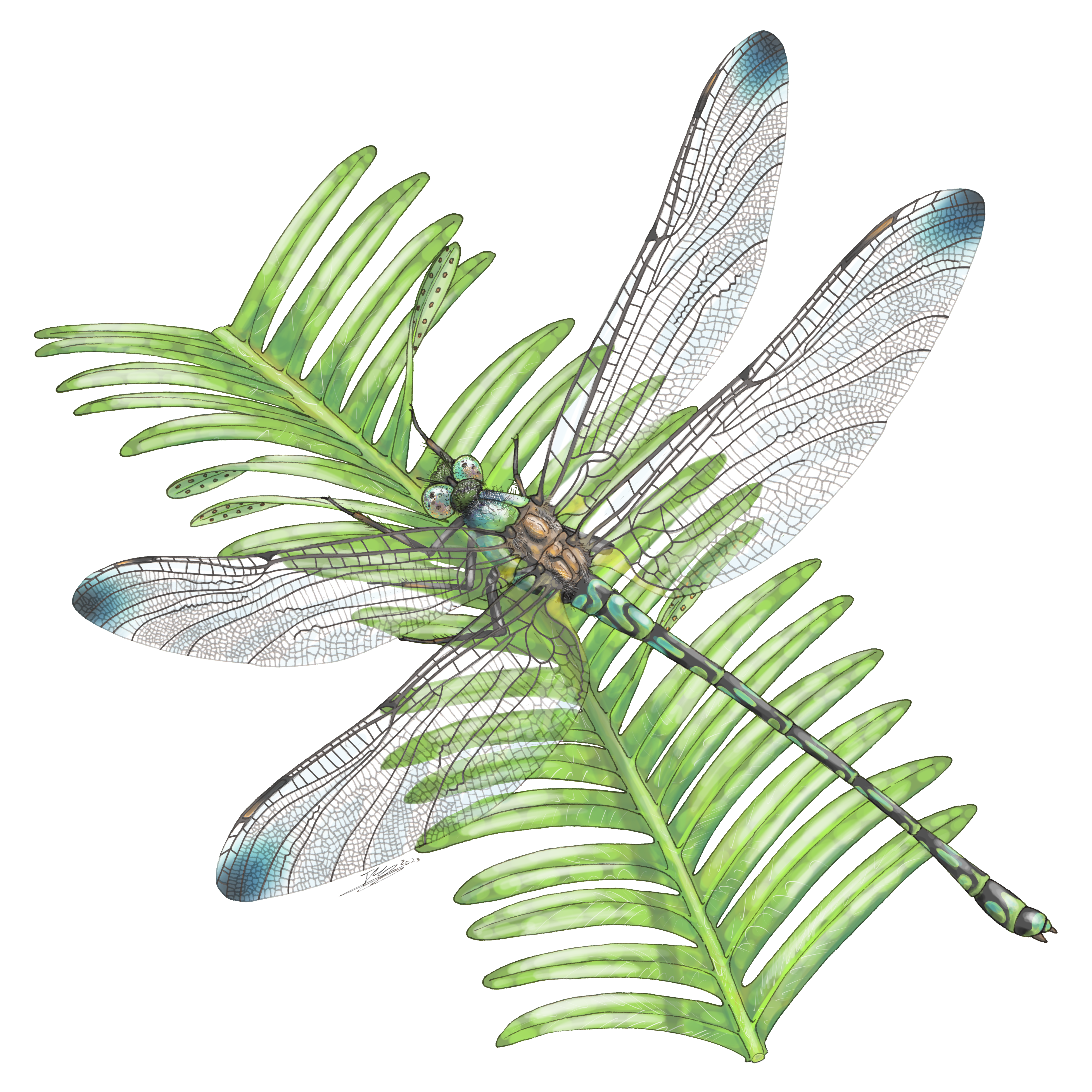
The image has had attention on the social media platform ‘X’ since the paper was published, further celebrating this beautiful fossil.
The reconstruction was only possible through funding made available by the Friends of Bristol Museum, Galleries & Archives.
Deborah Hutchinson, Curator, Geology, Bristol Museum & Art Gallery.